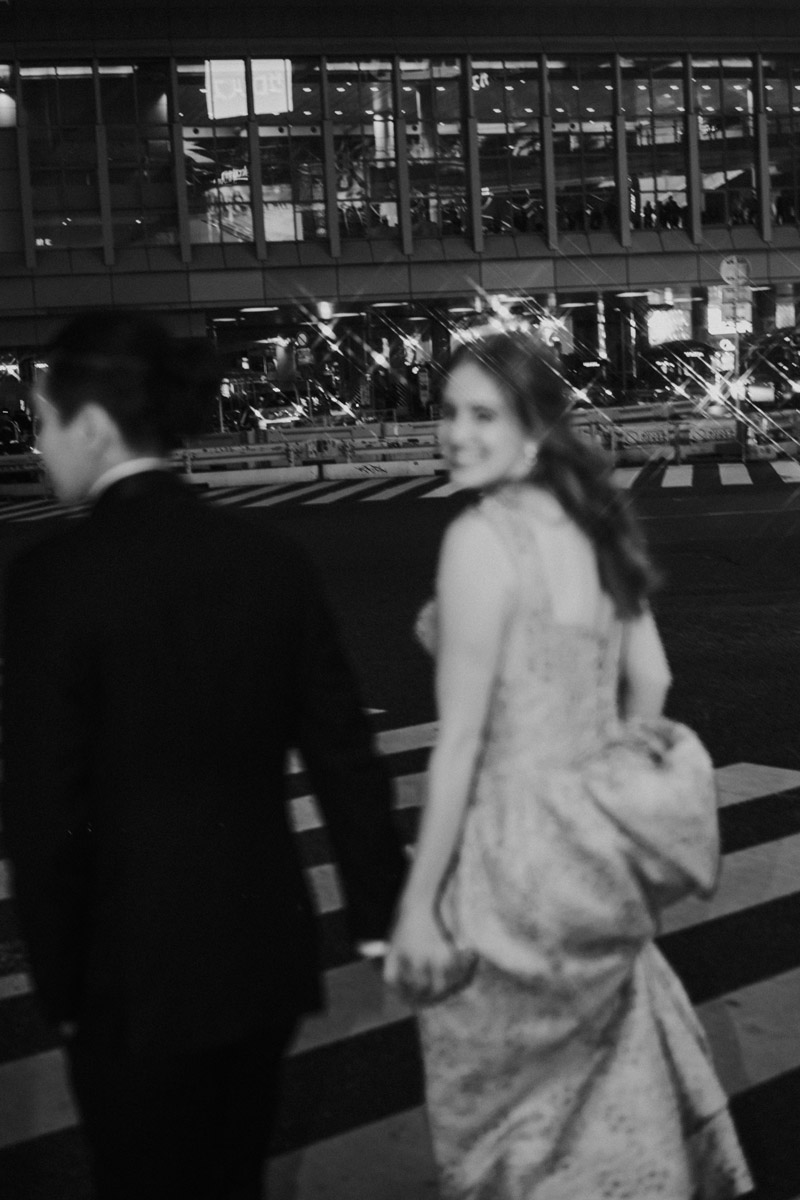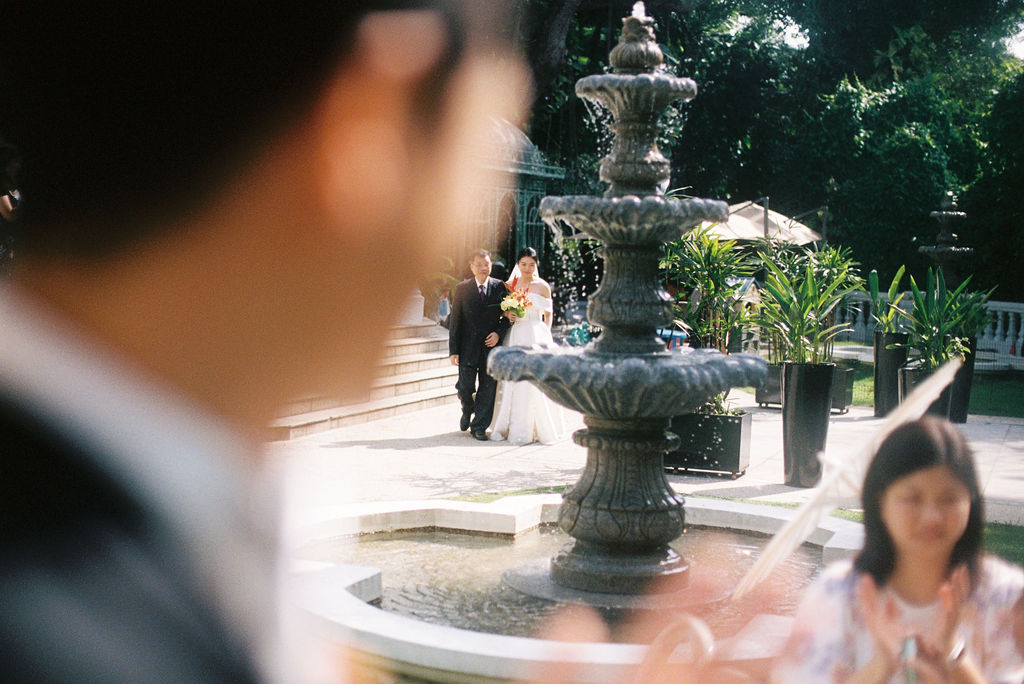
Few moments at a wedding carry as much visual weight as the procession. The room stills, the music shifts, and everyone turns. Getting the order right and rehearsing it properly means that the moment lands the way it should.
This guide covers the standard procession sequence for civil weddings in Singapore, common variations for church and other ceremony types, and a few things we’ve learnt from years of standing at the back of venues, clipboard in hand, making sure everyone walks in on cue.
The Standard Civil Wedding Ceremony Procession Order
For civil weddings in Singapore, the solemniser will already be positioned at the front of the aisle before proceedings begin. The groom and groomsmen are typically there too, waiting. The parents of both families, including the mother of the bride, will be seated in the front rows before the procession begins.
The march-in order for the bridal party then follows this sequence:
| Order | Who |
|---|---|
| 1 | Bridesmaids (paired or solo) |
| 2 | Maid of Honour (last of the bridesmaids) |
| 3 | Page boy, ring bearer, flower girl(s) |
| 4 | Bride (with father, both parents, or solo) |
As a general rule, gentlemen stand to the right and ladies to the left. Guests of the groom occupy the right side of the venue; guests of the bride take the left. The bride accordingly stands to the left of her father.

A Few Things Worth Knowing
Bridesmaids benefit from something to hold. A small posy does more than look pretty; it gives them something to do with their hands, which genuinely helps with nerves. Sequence them by height if you like, with your Maid of Honour walking in last.
Flower girls go just before the bride. They walk ahead and toss petals to “freshen the aisle”, which is a lovely tradition, but do check with your venue coordinator first as some venues are strict about petals on their floors.
Two pieces of music make a bigger impact. One track for the bridal party, then a distinct second piece for the bride’s entrance. The shift in music signals to the room that the moment has arrived. If you’re unsure what to plan, our guide to wedding music covers the key pieces you’ll need.
Decide in advance whether the bridal party sits or stands during the ceremony. If they’re sitting, reserve those seats so they can settle quickly and quietly after walking in.
Church, Malay, and Chinese Ceremony Variations
Wedding ceremony procession order varies across ceremony types. Here’s a quick reference:
Christian / Church ceremonies often follow a more structured processional tradition. The groom typically enters with the officiant (or his best man), followed by the groomsmen paired with bridesmaids. The Maid of Honour enters just before the flower girl, with the bride and her father last. Some denominations have their own specific expectations, worth confirming with your church early. Our church weddings guide covers what to expect from different denominations.
Malay solemnisations traditionally involve the groom’s procession (with kompang drumming, if any) arriving at the bride’s home or venue before the akad nikah. The structure differs significantly from a Western-style march-in, with the emphasis on the groom’s arrival and the solemnisation ritual itself rather than a formal procession order.
For Muslim couples, the solemnisation process is different from the civil process, more information can be found at the Registry of Muslim Marriages.
Chinese wedding ceremonies at the hotel ballroom stage or in a restaurant typically follow a civil procession, with the couple entering together to applause. During a Chinese tea ceremony, the paternal side of the family will be served first, followed by the maternal side. And the sequence of serving tea typically follows seniority: grandparents, then parents, then elder relatives. However, we have also come across families who would serve parents first before grandparents.

Common Variations
Groom walks in first. In some cultures and religions, the groom enters with his parents, ahead of the bridesmaids and bridal party. This is common in certain church traditions and is worth discussing with your officiant.
Groomsmen paired with bridesmaids. Instead of the groomsmen waiting at the front, some couples prefer them to walk in paired with each of the bridesmaids. If you go this route, an equal number on each side makes the pairing neater.
Best man and Maid of Honour only. Space constraints or a preference for simplicity sometimes mean only the two principal attendants walk in. In this case, the best man typically holds the rings.
Parents walking the bride in. Increasingly common, and genuinely moving: the bride walks in flanked by both parents rather than just her father. Some brides also choose to walk in alone.
Story time: We’ve had plenty of rehearsals where bridesmaids or groomsmen couldn’t attend – some were overseas, others had work commitments that made it impossible to fly in early. As planners, we’d step in ourselves to fill the positions, marking the spacing so that whoever was there could rehearse as close to the real thing as possible. It’s not glamorous work, but a procession that’s been walked through once always looks noticeably better than one that hasn’t.
Before You Finalise Your Procession
- Confirm solemniser / officiant requirements for procession order
- Decide on one piece of music or two
- Confirm with the venue whether petal-tossing is permitted
- Reserve seats for the bridal party if they’ll be seated during the ceremony
- Schedule a rehearsal and plan for some attendants not to make it
- Brief parents on when they will be seated and by whom
One rule that applies regardless of what you decide: hold a rehearsal. Walk it through at least once. It does not need to be perfect; it just needs to happen.
If you’re working through your ceremony programme more broadly, our guide to preparing your wedding music is a useful companion piece.