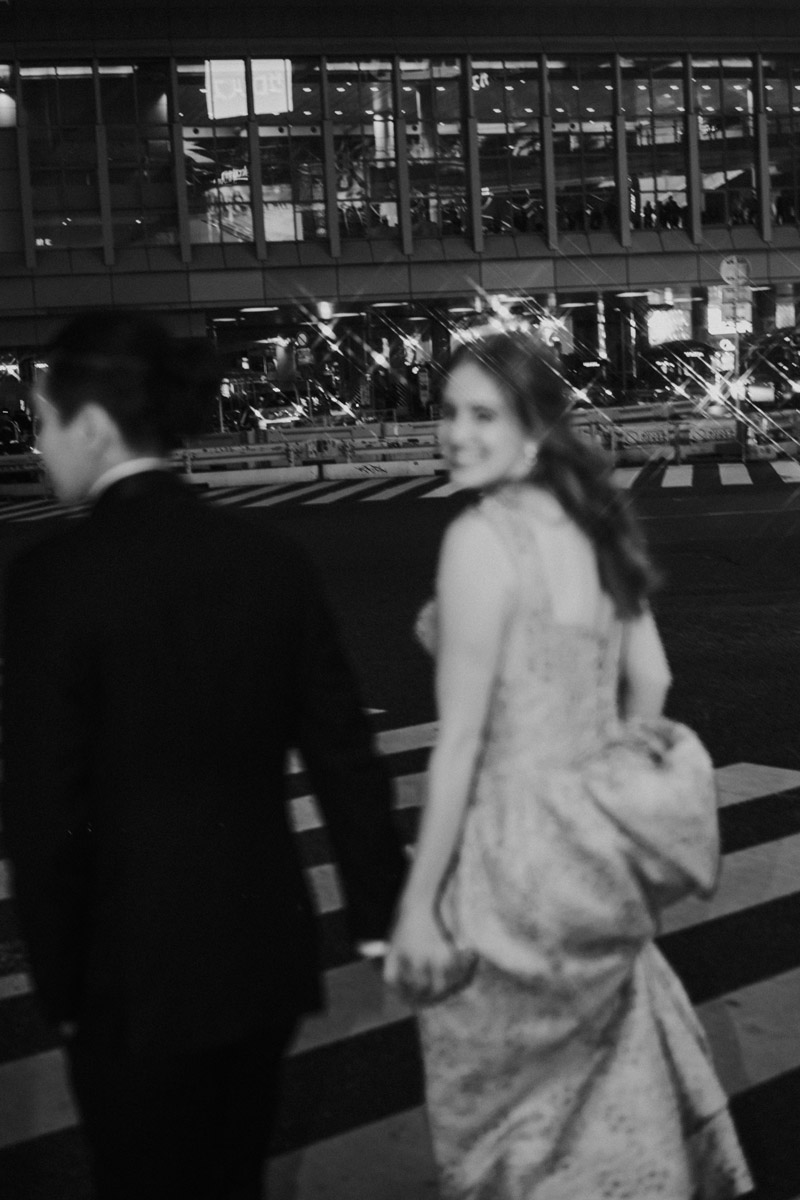
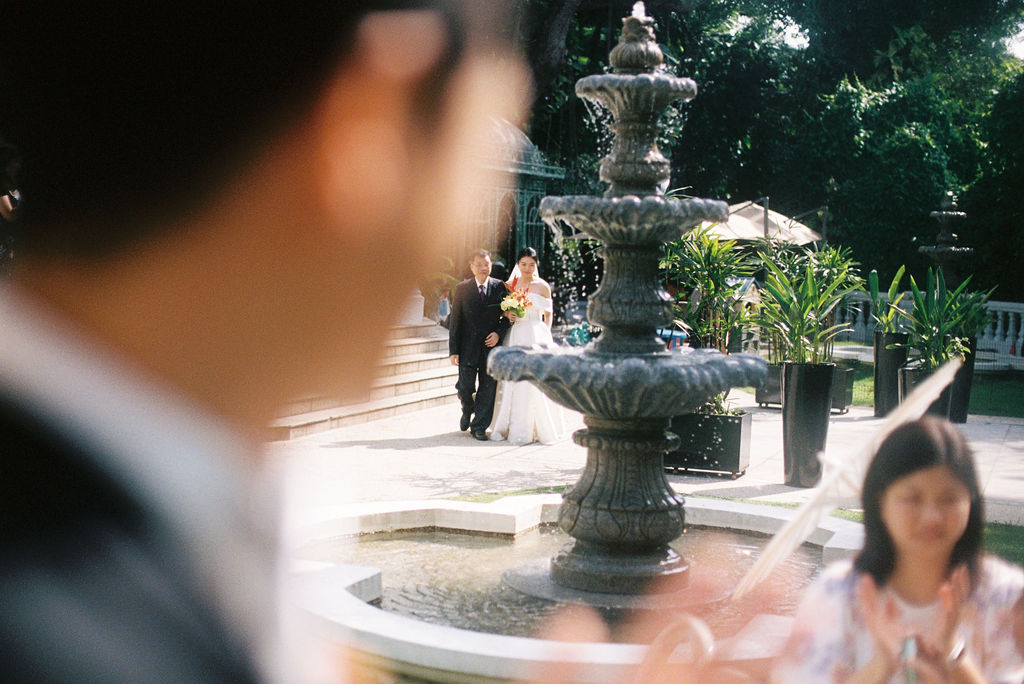
One Saturday in early March, Charmaine Yap and Theodore Tan set out with a clear mission. They had four restaurant appointments lined up in a single afternoon, a two-month planning window, a guest list of nine, and a budget under SGD $5,000. By the end of the day, they wanted to know where they would get married.
They were not interested in a ballroom, a hotel function room, or a decorated tent in a garden. They wanted a real restaurant, one that already felt alive on its own. The plan was simple: a private lunch with both sets of parents and one sibling, in a place where the food would genuinely matter.
Restaurant JAG was the final stop. The decision happened almost as soon as they walked in. Natural light streamed through the windows. Greenery pressed up against the glass, so the space felt wrapped in foliage rather than framed by it. The menu focused on seasonal vegetables and aligned beautifully with Charmaine’s values as a pescatarian. Everything felt coherent. They confirmed their restaurant wedding with JAG shortly after.
Their story is a small but clear sign of a shift already underway in Singapore. Couples with smaller, more intentional guest lists are choosing restaurants over traditional venues and discovering that the right dining room can comfortably hold the weight of an entire wedding, ceremony included.


Why Restaurants Work (When the Fit Is Right)
The appeal of a restaurant wedding lies in its coherence. A ballroom gives you a blank canvas. You bring in the flowers, lighting, food, and often the furniture, then work to pull everything together.
A restaurant, on the other hand, already carries its own personality. The space has a point of view, and that can either feel like its greatest strength or a firm limitation, depending on what you want.
For couples who have a strong sense of themselves, a restaurant’s existing identity can do a surprising amount of heavy lifting. The aesthetic is already considered. The food is designed to be the main event. The room has been planned by people who care about how it looks, sounds, and feels when it is full of guests.
Choosing a restaurant wedding is often less about securing a neutral space and more about finding alignment. You are not only asking whether the room can hold your guests. You are asking whether it reflects something honest about who you are and how you like to gather.
This approach works best at smaller guest counts. Singapore’s fine dining and private dining scene has grown rapidly in recent years. Many restaurant buyouts or private dining rooms comfortably host somewhere between 8 and 30 people. Once the guest list grows beyond that, you start to move into larger locations that behave more like classic event venues, and the decision-making process changes.
What to Look For (And What to Ask)
Charmaine and Theodore’s way of shortlisting venues offers a useful framework. Before they set foot in any restaurant, they defined their criteria. That clarity is the reason four venues in one afternoon were enough.
They knew they wanted a fully private space and not a cordoned-off corner of a busy dining room. Natural light was important. Accessibility for elderly parents mattered. They also cared deeply about the restaurant’s food philosophy and wanted a menu they could proudly stand behind. When Restaurant JAG met all four criteria, the decision felt straightforward.
Before you begin visiting potential locations for a restaurant wedding, it helps to work out your non‑negotiables.
Natural light is one factor many couples overlook. It shapes how the room feels from the moment you walk in, and it has a big impact on photography. Accessibility is another area that can slip down the list until it becomes a problem. If parents or grandparents are attending, look carefully at step‑free routes, lift access, and the comfort of the seating.
Food philosophy deserves special attention. A restaurant wedding brings the menu into sharp focus in a way that a standard catered banquet often does not. If you have significant dietary requirements, strong preferences, or cultural considerations among your guests, you will want to know early whether the kitchen can handle these with real enthusiasm rather than treating them as reluctant adjustments.
We spoke to an Italian restaurant, Fico, at East Coast Park, who built their menu around seasonal produce and cucina povera, describe their approach as a genuinely collaborative one. “We work closely with each couple to shape something that feels personal, while staying true to our seasonal, produce-led approach,” they say. “There’s flexibility to accommodate dietary requirements and cultural preferences, and we approach these conversations thoughtfully rather than as limitations.”
Those discussions work best when they begin early (ideally once the booking is confirmed) so the menu can anchor the whole experience rather than be resolved as a late adjustment. Format is also open for discussion: a traditional set menu, a grazing spread, live stations. The question the kitchen asks first is what best reflects the couple and how they want their guests to experience the day.
When you reach out to enquire, a few key questions help you compare options:
- Does the restaurant offer a full buyout, a private room, or both?
- What are the minimum spends for each option?
- How flexible is the set menu, and can it be adapted for dietary or cultural needs?
- Has the team hosted wedding ceremonies or solemnisation before, or only dinners?
A restaurant that has already handled a ceremony understands the practical choreography of the day. They know where guests will stand, how to time food around speeches, and how to support a solemn moment in the middle of an active service day.


The Practical Mechanics
Most private dining arrangements for a restaurant wedding in Singapore run on a minimum spend model instead of a flat hire fee. Your food and beverage budget is effectively doing double duty. It covers your celebration and your venue at the same time.
This can work very well if you had planned to prioritise a memorable dining experience anyway. Even so, it is worth confirming a few details at the start:
- Does the minimum spend cover food only, or both food and beverages?
- Are service charge and GST included in the quoted figure, or added on top?
- What happens if your final bill falls under the minimum spend?
Timing is another practical consideration. Restaurant kitchens operate on their own rhythms. A private lunch or dinner usually sits within a broader service day and may need to respect existing opening and closing hours.
Confirm your start and end times early, and ask how much flexibility there is if the ceremony runs slightly longer than planned. Knowing the boundaries in advance can prevent unnecessary stress when you are in the middle of your vows.
Charmaine and Theodore handled one subtle but important detail particularly well. They chose a restaurant whose team felt warm on a human level, not only polished in a professional sense. That difference becomes very real when you are sharing some of your most personal moments in a space that does not belong to you.
The team at Fico put it simply: “What often surprises couples is the level of attentiveness from the team on the day itself. Beyond the setting, it’s really the small, thoughtful gestures that shape the experience.” That might mean a spontaneous round of champagne to mark a moment, or quietly offering second helpings of a dish a guest has clearly loved. “It’s our way of extending hospitality beyond the expected,” they say, “so the day feels not just well-run, but genuinely cared for.”
A manager who understands the emotional weight of the day, and who will respond to small surprises with kindness instead of rigid protocol, is worth as much as the food on the table. That quality is something you can only really sense in person, which is one more reason to visit before you commit, and to pay attention to how the team speaks about what they do, not just how the room looks.


Starting the Search
The most efficient way to start planning a restaurant wedding is also one of the simplest. Make a shortlist of restaurants you already love or have been curious about. Then check whether they offer private dining rooms or the option of a full buyout.
Singapore’s food media does a reasonable job of tracking private dining options, but direct enquiry is often still the fastest way to get accurate, current information. Websites do not always reflect the latest pricing, capacity, or policies.
Whenever possible, visit in person before you commit. A room can look very different in photographs compared with how it feels on a Tuesday afternoon. Stand in the space at roughly the time of day you plan to hold your celebration, and notice the details. How does the light move through the room? How easily can people circulate between tables? Where would an elderly parent sit comfortably?
Charmaine and Theodore’s entire wedding came in under SGD $5,000. The restaurant did not feel like a compromise to save money. It sat at the heart of the celebration.
A restaurant wedding does not have to cost more than a traditional venue. The right space simply needs to feel right for you.
You can read Charmaine and Theodore’s full wedding story, a nine‑person celebration that shows how thoughtful and intimate does not have to mean small in spirit.