


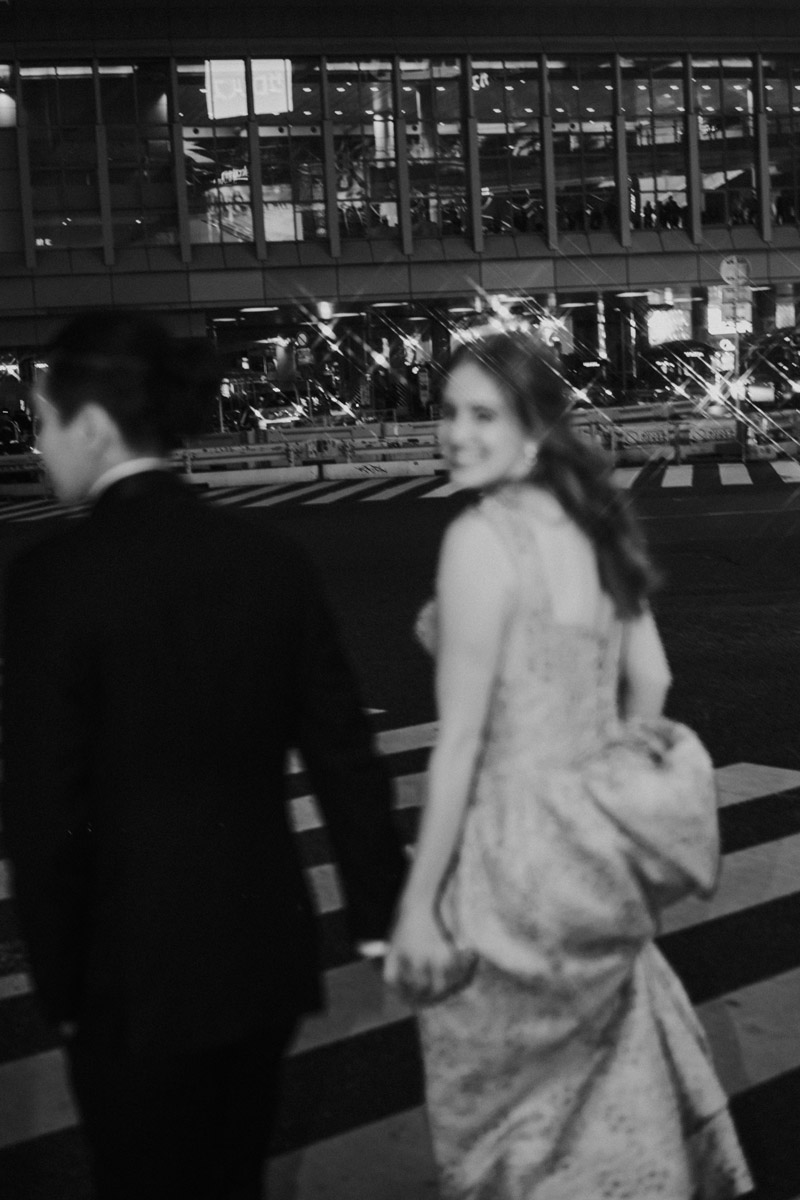
When Janna and Claudius started planning their wedding, they didn’t begin with a checklist or a run‑sheet. They began with one clear wish: They wanted their guests to feel like they were simply hanging out with them for an afternoon, not attending a formal wedding.
That single intention shaped almost everything.
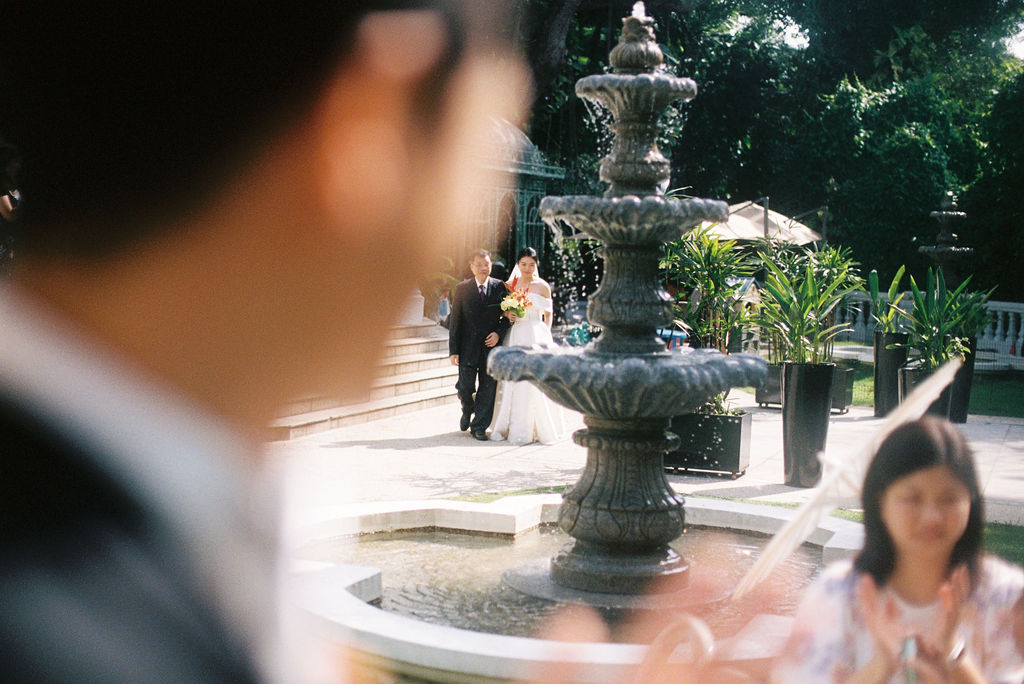
It helped them decide which parts of a typical Singapore wedding to keep, which ones to shorten, and which ones to skip. It’s also why their day at the Armenian Apostolic Church of St. Gregory the Illuminator unfolded the way it did:
- A small ceremony for about 100 guests inside Singapore’s oldest church.
- A short, focused tea ceremony for the seniors right after.
- A long, relaxed lunch on the lawn for around 190 guests.
There was no formal march‑in. No staged entrance. No big “ta‑da” moments. Their wedding is a reminder of something simple but powerful: You don’t have to follow the standard Singapore wedding programme. It’s an option, not a rule.

At a Glance
- Venue: Armenian Apostolic Church of St. Gregory the Illuminator, Singapore
- Guest count: 100 at ceremony, 190 at lunch reception
- Planning timeline: 1 year, no wedding planner
- Budget range: SGD $30,000–50,000
- What they kept: A short tea ceremony for the seniors
- What they reimagined: The reception sequence, designed around long table time rather than scripted set pieces
- Main lesson: Build the programme around how you want to spend the day, not the other way around.
The Standard Programme Is One Option, Not The Rule
Most Singapore wedding programmes still follow a familiar pattern. A morning gatecrash. A tea ceremony. A church or solemnisation service. A break. A march-in to the ballroom. A first dish, a yum seng, a second march-in, speeches, cake-cutting, video montages, and a final yum seng before the night winds down.
There are good reasons this structure has lasted. The structure carries family expectations, marks the day’s emotional beats, and gives a couple something to hold on to when the morning starts at 4am and there are two hundred people about to look at them. Each segment, done well, can be meaningful.
But more couples are now treating these elements like ingredients, not a fixed recipe. The gatecrash, for instance, is increasingly being reimagined. Some couples turn it into a quiet exchange of promises between the groom and the bride’s parents, others keep the playful version, and others skip it altogether in favour of a calmer start to the day. The same kind of thinking can be applied to every other part of the programme.
Janna and Claudius’s wedding is a useful example of what happens when a couple does this with the whole day. They simply started with how they wanted to spend the afternoon and built their Singapore wedding programme around it.
Start With The Day You Actually Want
When we asked Janna and Claudius which moment they would most like to relive, they didn’t pick the ceremony. They picked the lunch reception.
Why? Because that was when they got to spend real, unhurried time with each guest. That feeling is actually a programme decision. If the lunch is the part you care about most, it can’t be just 20 minutes squeezed between a march‑in and a video montage. It needs to be the centre of the day.
The afternoon they ended up with reflected that priority exactly. The ceremony was kept small and intimate. The tea ceremony for the seniors was kept because it held real meaning for the family. From there, the day softened into a long lunch, with the couple interacting with their guests at their own pace. The day wasn’t unstructured; it was structured around the right thing.


The Questions That Help You Design Your Programme
Choosing not to follow the standard programme doesn’t mean you won’t have structure. You still need a clear flow. Your vendors still need to know what’s happening when. What changes is how you decide what earns a place in your day.
Here are a few simple questions to guide you:
Who is each part of the day for? Some segments matter most to the couple. Some matter most to the parents. Some matter most to the bridal party or to specific groups of guests. Knowing who you’re staging each segment for makes it much easier to decide whether to keep it, shrink it, or rework it.
What do your families actually want? Some traditions carry weight that a couple shouldn’t decide on alone. The tea ceremony Janna and Claudius held for the seniors stayed because it mattered to the family. Other things may turn out to be less important; the only way to know is to ask, gently and early, rather than guess.
What are you protecting? Every programme is built around something. If it’s dinner, you protect dinner time. If it’s the ceremony, you protect the ceremony’s stillness. If it’s the after-party, you keep speeches short. The protected element tells you what to prioritise.
On a Singapore Lawn, Comfort Is Part Of The Programme
A garden lunch in Singapore means a programme decision becomes a climate decision. Janna and Claudius splurged on air coolers and standing fans, and laid hand fans on every chair. None of this sounds glamorous, but a relaxed afternoon quickly becomes anything but when guests are visibly uncomfortable. If you’re designing for unhurried time outdoors, the comfort layer needs the same care as the seating chart.
A Practical Takeaway for Your Singapore Wedding Programme
Before the next planning conversation, try this together:
- Each of you writes down three moments you most want to remember a year after the wedding.
- Don’t pick the most photogenic moments. Pick the ones that feel the most like you.
- Look at your current programme or rough plan. Ask:
- Which segments support these three moments?
- Which segments compete with them or distract from them?
The competing segments don’t all have to go. The point isn’t to remove things. It’s to make sure each piece of the day is there because it belongs there, to you, to your families, and to the afternoon you actually want to be spending together.


See this advice in action
These insights come from Janna and Claudius’s wedding at Singapore’s oldest church, where a long lunch and a relaxed afternoon replaced the standard reception sequence.



[…] legal side, the next decisions are about what your solemnisation actually looks like. Our guide to building a Singapore wedding programme covers how to shape a ceremony and a day that feel like […]