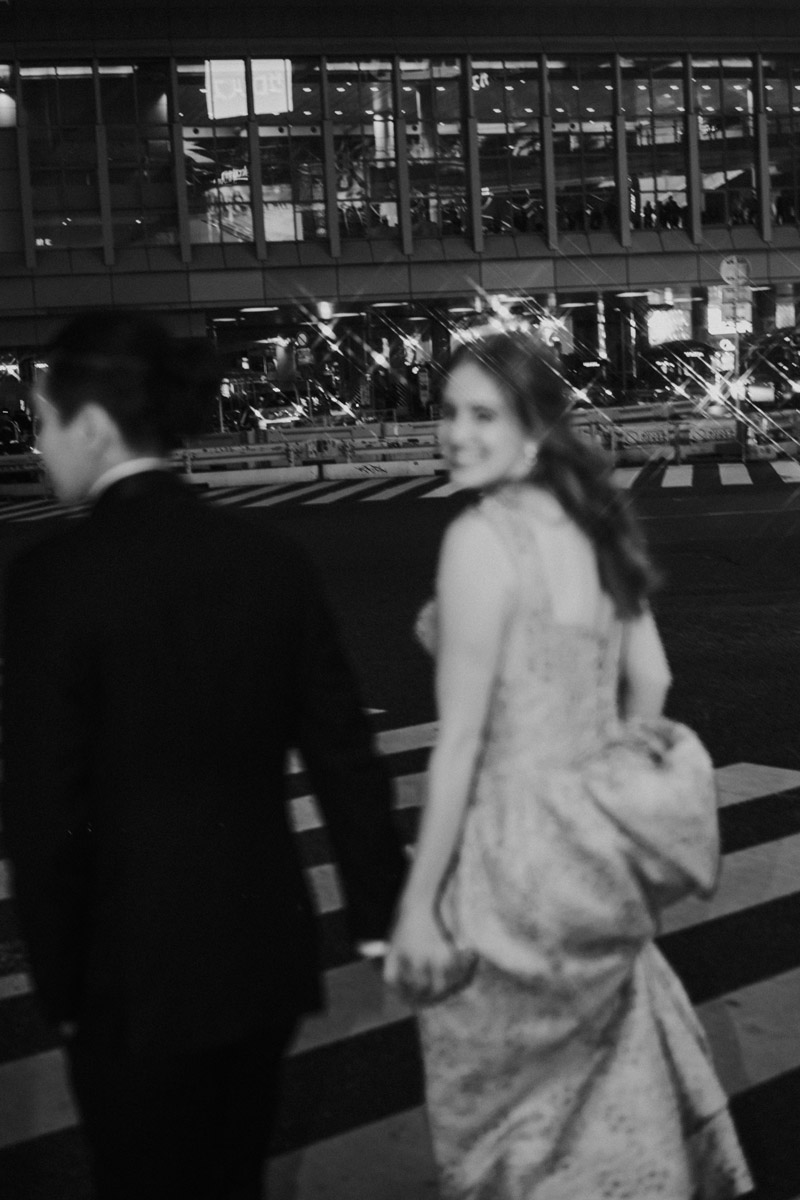
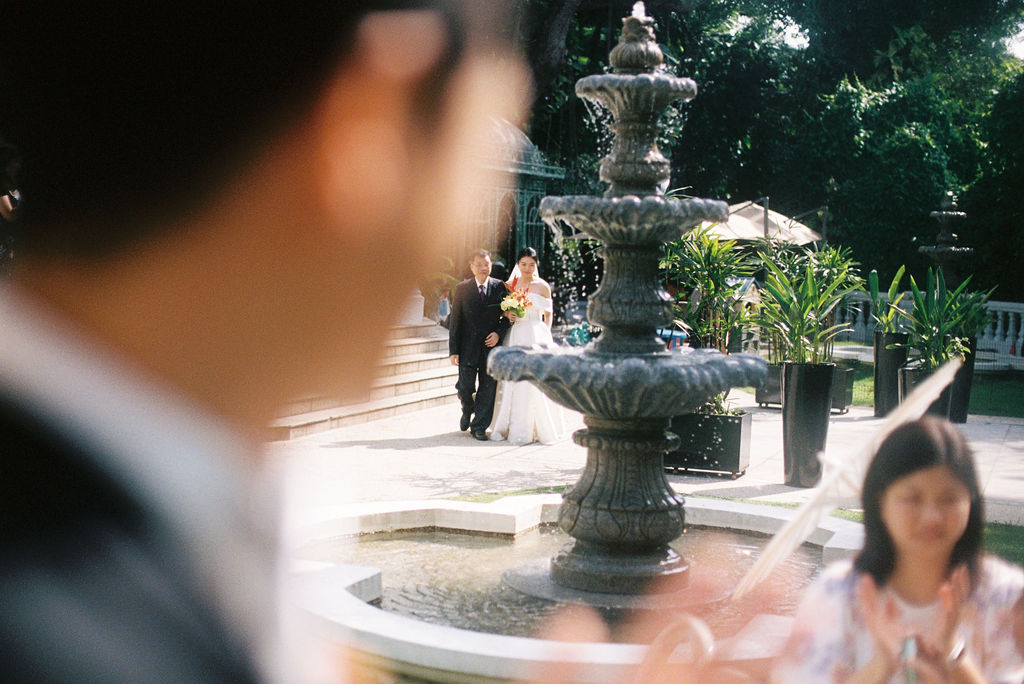
Charmaine Yap had been planning for months. She designed seven handmade puzzles, each one built from the shared life she and Theodore Tan had been quietly putting together: museums they’d visited, poems they’d exchanged, films they’d watched side by side. She enlisted his friends and his brother to deliver clues, and the trail ended at Begonia Villa at Gardenasia, where she got down on one knee on 29 March 2025.
Theodore had his own proposal in the works. He recreated their second date at East Coast Park with a picnic and coffee, then walked with Charmaine all the way to Marina Barrage. Along the way, he showed her a short film he’d made of a mime preparing for a proposal, a nod to his university days in a mime troupe. Because Charmaine is a lawyer who has been working extensively on food donation legislation, he presented his proposal in the form of a Bill.
They proposed to each other. Separately, on their own terms, without asking the other to wait.

Why This Is Becoming More Common
The traditional proposal tends to follow a familiar script: one person plans, the other receives. That script is so ingrained that many couples never think to question it, even when it doesn’t quite reflect who they are.
For couples who see themselves as equals, the idea that one person holds all the romantic initiative while the other simply responds can feel slightly out of step. Not necessarily wrong, just not quite right for them. A mutual proposal is one way of bridging that gap. It isn’t always a grand statement about gender or tradition; often, it’s simply a practical reflection of how two people already relate to each other.
Double proposals aren’t entirely new, but they’re becoming more common as couples feel freer to design their engagement around their relationship instead of convention. And once the idea comes up, it often feels logical: if you’ve been building a life together, if you’ve already spoken honestly about the future, if you both know where this is heading, why would only one of you be the one to ask?


The Practical Bit: How Do You Actually Do This?
The first question many couples have about mutual proposals is logistical: do you coordinate, or do you plan separately? The answer depends on your relationship, your personalities, and, frankly, how well you can keep secrets from the person you spend most of your time with.
Charmaine and Theodore chose a loose arrangement. They knew they both wanted to propose, but they didn’t share the details of their plans. That meant each proposal was a genuine surprise to the person receiving it. The result was two deeply personal, distinct experiences: hers, a collaborative puzzle trail built around their shared history; his, a recreation of an early date with a very on-brand flourish of performance art.
Other couples prefer to plan more openly. They’ll decide together to propose to each other and agree that both will take the time to do it properly. This approach can feel more comfortable if one partner is anxious about secrets or big surprises. There’s nothing less romantic about choosing the experience together.
What tends to matter most, whatever the approach, is that each proposal reflects the person giving it. Mutual proposals work when both partners can express themselves fully, rather than just reacting. Charmaine created a puzzle trail because that’s how she thinks and how she loves. Theodore wrote his proposal as a Bill because he knows Charmaine, knows her work, and knew that format would mean something to her. Neither of them was trying to hit a universal standard of romance; they were simply being themselves.

The Engagement Period Looks Different Too
Mutual proposals also change the way couples tell their story. Instead of a single defining moment with one person doing the asking, the engagement belongs to both partners from the very beginning, which is arguably where it should be anyway.
It can also influence how planning unfolds. When both partners have taken an active role in shaping the proposal, there’s often less of the quiet negotiation later about whose vision takes the lead. Charmaine and Theodore went on to plan a nine-person wedding in two months, each of them clear about what they wanted and willing to say so. Whether that’s directly connected or just a happy coincidence, it’s worth paying attention to.

If You’re Considering It
There isn’t a standard template for mutual proposals, and that’s exactly why the idea appeals to many couples. If you’re drawn to it, there are a few things worth thinking through.
First, consider what your partner actually wants. Do they dream of being proposed to, or are they the kind of person who would find it more meaningful to be the one who asks? Some people quietly hold onto the hope of being asked. Others would much rather initiate. Many have never had the space to even consider which feels more right. Talking about this openly, even if it takes some of the surprise out of the equation, usually leads to a better outcome than guessing.
Second, whatever you plan, make it specific to the two of you. The proposals that resonate most are the ones rooted in real knowledge of another person, not a generic idea of what romance is supposed to look like. Theodore didn’t make a mime video because it would impress anyone on paper. He made it because mime was part of his own story and because he knew Charmaine would immediately understand and appreciate it. That kind of detail is what makes a proposal feel truly personal.
Third, timing is flexible. Charmaine and Theodore’s proposals were about a month apart, but there’s no rule that says they need to happen on the same day or even in the same week. You could space them out over a weekend, a season, or whatever feels right. The point is that both of you get a moment that feels considered and meaningful.
Ultimately, your engagement is the first chapter you write together. There’s no real reason for only one of you to be holding the pen.
Charmaine and Theodore got married at Restaurant JAG in Singapore on 10 May 2025, with seven guests and a table full of vegetables and flowers. Read their full wedding feature to see how they pulled off an extraordinary celebration for under SGD $5,000.